
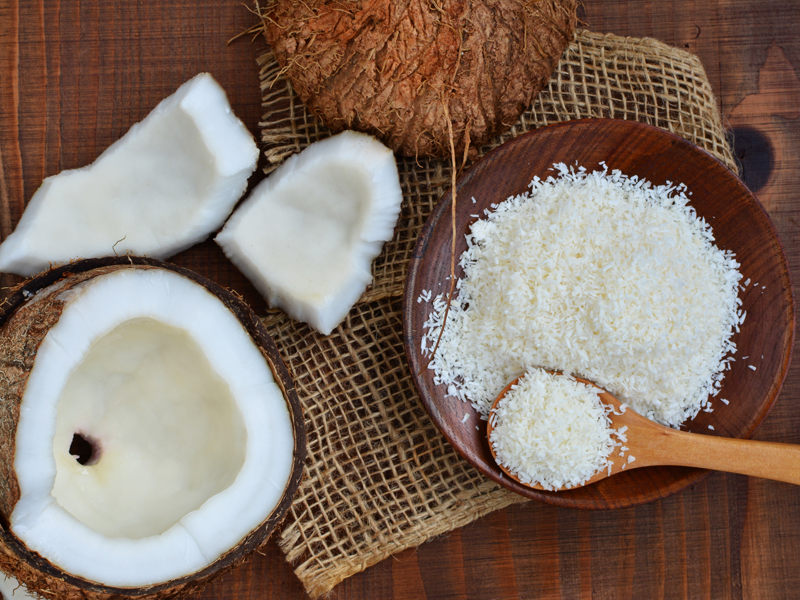
Desiccated coconut, a versatile and widely used product, has become a staple in the global food industry. This article delves into the intricate process of desiccated coconut production, exploring the methods, benefits, and challenges associated with this fascinating industry.
Understanding Desiccated Coconut
Desiccated coconut refers to the dried, finely shredded or flaked coconut meat obtained from the white part of the coconut. This form of coconut has gained immense popularity due to its long shelf life, convenience, and diverse applications in culinary and industrial settings.
The Harvesting Process
The journey of desiccated coconut begins with the careful selection of coconuts. Farmers must choose mature coconuts with a high oil content to ensure the quality of the end product. Once harvested, the coconuts undergo a meticulous process of de-husking and shelling to extract the coconut meat.
Grating and Extraction
After obtaining the coconut meat, the next step involves grating or shredding it into small, uniform particles. This can be achieved through various methods, such as mechanical grating or automated shredding machines. The grated coconut is then subjected to extraction processes to obtain coconut milk. You can read more details at briquette manufacturers
IV. Drying Techniques
Desiccation, or the drying process, is the critical phase in desiccated coconut production. Several drying techniques are employed, including sun drying, hot air drying, and kiln drying. Each method has its advantages and challenges, impacting the flavor, texture, and color of the final product.
a. Sun Drying:
Traditional and cost-effective, sun drying involves spreading the grated coconut under the sun. While this method is natural, it is weather-dependent and may result in variations in quality.
Tradisional dan hemat biaya, penjemuran dengan cara menjemur kelapa parut di bawah sinar matahari. Meskipun metode ini alami, namun bergantung pada cuaca dan dapat mengakibatkan variasi kualitas.
b. Hot Air Drying
Using specialized drying equipment, hot air drying offers a more controlled environment. This method reduces the risk of contamination and ensures a consistent quality of desiccated coconut.
Menggunakan peralatan pengeringan khusus, pengeringan udara panas menawarkan lingkungan yang lebih terkendali. Metode ini mengurangi risiko kontaminasi dan memastikan kualitas kelapa kering yang konsisten.
c. Kiln Drying
Industrial-scale operations often opt for kiln drying, a faster and more efficient process. Kilns provide precise control over temperature and humidity, resulting in a product with enhanced shelf life.
Operasi skala industri sering kali memilih pengeringan kiln, yang merupakan proses yang lebih cepat dan efisien. Kiln memberikan kontrol yang tepat terhadap suhu dan kelembapan, sehingga menghasilkan produk dengan umur simpan yang lebih lama.
Quality Control and Standards
Maintaining quality standards is crucial in the desiccated coconut industry. Various factors, including moisture content, particle size, and color, are closely monitored to meet the specifications set by international regulatory bodies. Adhering to these standards ensures that the product is safe for consumption and suitable for a wide range of applications.
Packaging and Storage
Once the desiccated coconut reaches the desired moisture content, it is packaged to prevent moisture absorption and contamination. Proper packaging materials and techniques play a vital role in preserving the quality of the product during storage and transportation.
Applications of Desiccated Coconut
Desiccated coconut’s versatility extends beyond the kitchen. It serves as a key ingredient in a myriad of culinary delights, from baked goods to curries. Additionally, the cosmetic and pharmaceutical industries utilize desiccated coconut for its moisturizing and nutritional properties.
Challenges and Sustainability
Despite its popularity, the desiccated coconut industry faces challenges related to environmental sustainability and ethical sourcing. Efforts are underway to promote responsible farming practices, reduce waste, and ensure fair labor practices throughout the supply chain.
Future Trends
As consumer preferences evolve, the desiccated coconut industry is witnessing a surge in demand for organic and sustainably sourced products. Innovations in processing technologies and packaging continue to shape the future landscape of this industry.
Conclusion
Desiccated coconut production is a fascinating blend of tradition and innovation, transforming a simple coconut into a versatile and indispensable product. As the industry navigates challenges and embraces sustainability, the future of desiccated coconut looks promising, with a continued impact on global cuisine and industry alike.